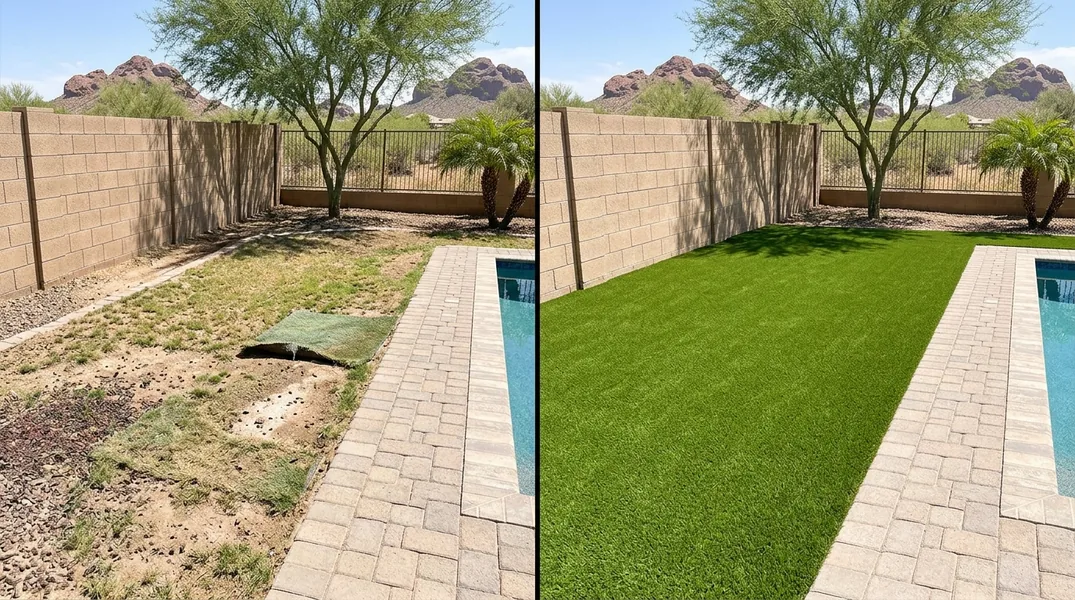
Why Caliche Is a Challenge for Artificial Grass Installation
Tempe homeowners know that caliche, a hard layer of calcium carbonate soil, is practically a fact of life in the Arizona landscape. This dense, rock-like soil layer sits just beneath the topsoil and creates a significant challenge when installing artificial grass. Unlike natural grass, which can work around caliche with deeper root systems, artificial turf requires a stable, properly draining foundation to perform well and last for years.
When caliche isn't properly addressed during base preparation, water pools on the surface, creating muddy spots and potential damage to the turf backing. This becomes especially problematic during Tempe's intense monsoon season, when heavy rainfall can overwhelm a poorly prepared base. The weight of standing water also accelerates deterioration of the turf and can lead to mold and mildew growth underneath the artificial grass. This is why professional base prep isn't just recommended, it's essential for any successful artificial grass installation in our region.
Breaking Through Caliche: The First Step in Base Preparation
The foundation of any quality Residential Artificial Grass Installation starts with addressing the caliche layer. Professionals typically break through or remove the top portion of caliche to create a permeable base that allows water to drain naturally. This process, known as caliche removal or breaking, involves using specialized equipment to fracture the hardpan without removing all the soil beneath it. The goal is to create fissures that allow water to pass through rather than sit on top.
Once the caliche is broken up, the next step involves removing debris and creating a level surface. A proper base should be compacted but not so densely that it becomes impermeable again. The depth of caliche removal depends on your specific yard conditions and the extent of the hardpan layer. In some cases, only the top few inches need attention, while in others, deeper excavation is necessary. This is why a site assessment before installation is crucial, and it's one reason why calling a professional for a free estimate makes sense for your project.
What to Put Under Artificial Grass: Choosing the Right Underlayment
After caliche is addressed, the question becomes: what to put under artificial grass? The answer isn't one-size-fits-all, but professional installers typically recommend a layered approach. The most common base system includes a layer of crushed rock or gravel, followed by a geotextile fabric, and then a specialized artificial grass underlay or pad. Each layer serves a specific purpose in the overall drainage and support system.
Crushed rock, typically 4 to 6 inches of compacted limestone or granite chips, forms the first drainage layer above the broken caliche. This allows water to move laterally and downward rather than pooling. On top of this, a geotextile fabric prevents soil and fine particles from mixing with the rock layer, which would clog the drainage system over time. Finally, the artificial grass underlay, often made of recycled rubber or foam, provides cushioning, additional drainage, and stability for the turf itself. Some homeowners also choose permeable underlayment specifically designed for high-drainage applications, which is particularly valuable in North Tempe and other areas prone to heavy water runoff.
Artificial Grass Drainage Solutions for Tempe's Monsoon Season
Monsoon season in Tempe brings intense, sudden rainfall that can overwhelm poorly designed drainage systems. Proper artificial grass drainage isn't just about the base layers, it's also about the overall yard grading and surface design. A quality installation ensures that water flows away from the turf and toward natural drainage points or designated runoff areas. This might include creating subtle slopes in the yard or installing French drains and catch basins to manage water flow.
Many homeowners don't realize that artificial grass itself is permeable, allowing water to pass through to the base layers below. However, this only works if those base layers are properly prepared and the overall yard is graded correctly. During monsoon season, water can come down at rates exceeding an inch per hour, so the drainage system must be robust. Professional installers account for this by ensuring that the base is compacted to the right density (firm but not impermeable), that underlayment is high-quality and permeable, and that yard grading directs water appropriately. If your yard has existing drainage issues or low spots, these need to be addressed before artificial turf installation begins.
Artificial Grass Underlay Selection: Materials and Performance
The artificial grass underlay is the layer that sits directly beneath your turf, and it plays a critical role in comfort, drainage, and longevity. Common underlay materials include recycled rubber, closed-cell foam, and permeable synthetic fabrics. Recycled rubber underlayment offers excellent cushioning and durability, making it popular for Pet Turf & Dog Run Installation where impact absorption matters. Foam underlayment is lighter and more affordable but may compress over time. Permeable synthetic options provide superior drainage and are ideal for areas with high water tables or intense rainfall.
The thickness of the underlay also matters. Most quality installations use underlay between 0.5 and 1 inch thick. Thicker isn't always better, as it can reduce stability and make the turf feel spongy underfoot. The right choice depends on your specific needs, your yard's drainage characteristics, and your budget. In Tempe, where caliche and monsoons are both concerns, many professionals recommend mid-range to premium underlay materials that prioritize drainage performance. When you contact Tempe Turf Installation at (520) 482-0822, our team can assess your yard and recommend the best underlay option for your situation and budget.
Professional Turf Base Prep Near Me: When to Call the Experts
While some homeowners might consider DIY artificial grass installation to save money, turf base prep is one area where professional expertise truly matters. Improper base preparation leads to drainage failures, surface settling, and premature turf damage. A professional installer has the equipment to properly break caliche, the knowledge to select appropriate materials for your specific soil conditions, and the experience to anticipate drainage challenges before they become problems. This is especially true in Tempe, where local soil conditions and weather patterns require specialized knowledge.
Professional base prep typically includes a site assessment, caliche evaluation, proper excavation and material selection, compaction to the correct density, and grading for optimal drainage. These steps might seem simple, but they require skill and the right tools. When you choose Tempe Turf Installation for your project, you're getting a team that understands the unique challenges of installing artificial grass on caliche in our Arizona climate. We handle everything from breaking through hardpan to installing premium underlayment, ensuring your new turf looks great and performs reliably for years to come. Ready to get started? Call us at (520) 482-0822 or request a free estimate today to discuss your artificial grass project.
Looking for a professional artificial grass installation company in Tempe? Tempe Turf Installation responds fast for all your artificial grass installation needs.
Get a Free Quote